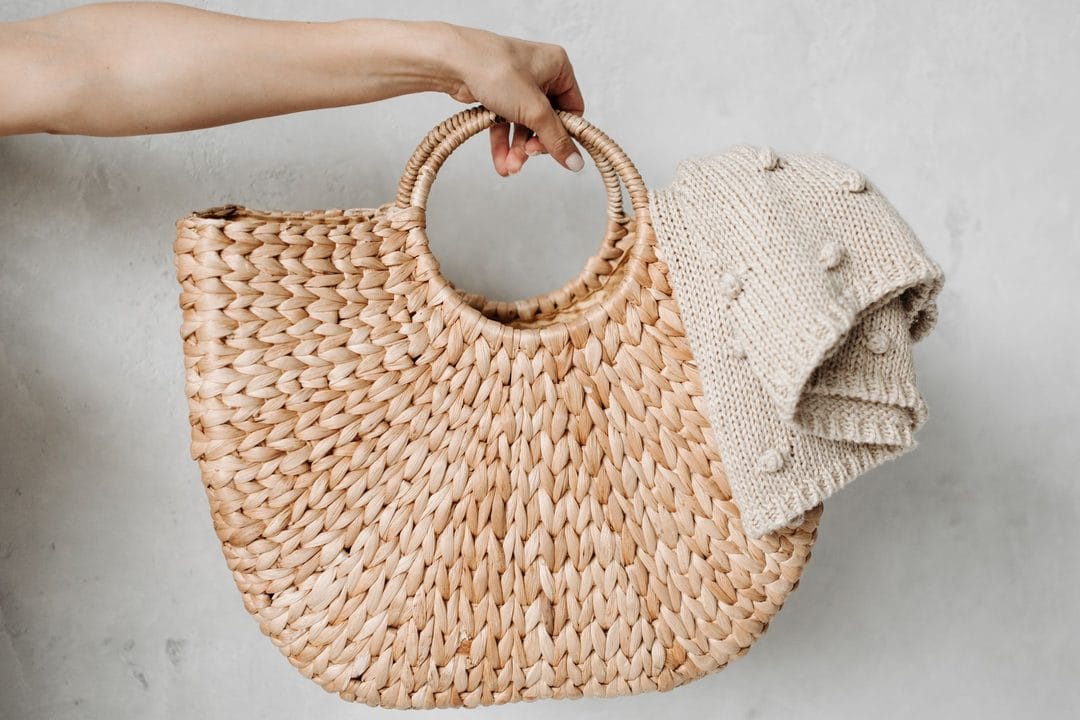
Walk down any high street this month and count the straw bags. You'll lose track before you reach the second block. They're slung over shoulders at the farmers' market, wedged under café tables, stacked by the till in every boutique that stocked up for summer — and by the second week of August, a good third of them will have a strap coming away from the body or a base gone soft and shapeless from one too many trips to the beach.
That's not bad luck. It's the difference between a bag built from proper palm raffia or seagrass and one stamped out of paper straw laminated to look the part. Both cost roughly the same at a glance, until you pick them up.
Why this bag, and why now
Part of it is simple supply — brands that spent two years chasing quiet luxury are suddenly leaning into texture again, and woven natural fibre reads as effortless in a way a structured leather tote doesn't in 30-degree heat. Part of it is more mundane: a straw bag looks deliberate even when you've grabbed it in under a minute on your way out the door, which matters more in July than any other month. Mango's raffia tote sold out twice this season at £39.99. Anthropologie's version, hand-woven in the Philippines, sits at £68 and has a six-week waitlist in the larger size. Neither is expensive as bags go, and that's exactly why so many are being bought without much thought.
The bags worth having share three things: they're woven from a continuous natural fibre rather than pressed paper, the handles are stitched through the body of the bag rather than glued to a rim, and the base has some kind of reinforcement — leather trim, a stiffened board insert, anything that stops the whole thing collapsing when you put a water bottle and a paperback in it. Skip any of the three and you're carrying a bag with a shelf life measured in weeks, not summers.
The tell that separates a £30 bag from a £300 one
Turn the bag over and look at where the handle meets the body. On the good ones, you'll see stitching that runs several centimetres into the weave, distributing the weight across a wide section rather than pulling on one point. On the bad ones — and this includes bags at every price point, not just the cheap ones — the handle is anchored to a single tab, sometimes glued rather than sewn, and it's the first thing to fail. I've had a £45 bag from a well-known Spanish high-street chain lose a handle in six weeks flat, and a £22 one from a market stall in Sitges outlast it by two full summers, purely because of that one construction choice.
Smell it, too, if you can. Genuine raffia and seagrass have almost no scent. A chemical or plastic-y smell usually means you're holding paper straw with a coating, which will crack rather than soften with wear, and won't take a light rinse if it gets rained on or splashed at a pool bar.
Three at three price points I'd actually buy
At the low end, Zara's woven tote at £25.99 uses proper palm straw and has leather-trimmed handles stitched, not glued — genuinely good value, though the internal lining is thin enough that keys will eventually wear a hole in the corner. In the middle, the Anthropologie hand-woven tote at £68 is the one I'd point a friend toward if she only wanted to own one straw bag this decade; it's heavier to carry empty, which sounds like a downside until you realise that weight is structure. At the top, Loewe's raffia basket bag runs into four figures and is, frankly, not four figures better than the Anthropologie one — you're paying for the label stitched inside, not for anything the bag does differently on your shoulder.
- Zara woven tote, £25.99 — best if you want this to last one really good summer and don't mind replacing it next year
- Anthropologie hand-woven tote, £68 — the one to buy if you only buy one
- Loewe raffia basket, from £1,050 — buy it for the label, not the construction, and know that's what you're doing
Skip the £15 versions stacked by the till in fast-fashion shops entirely. I know the maths looks tempting next to £68, but you'll have bought two, maybe three replacements by the time the Anthropologie bag is just getting broken in.
What actually ages well versus what just looks aged
There's a specific kind of wear that looks intentional — the fibre softening, the colour deepening slightly where your hand rests on the handle — and a kind that just looks broken. Real raffia does the first. Paper straw does the second: it goes from crisp to visibly cracked with almost nothing in between, usually somewhere around week five of regular use.
One more thing worth saying plainly: a straw bag is not a bag for anything valuable. Treat it the way you'd treat a good pair of espadrilles — beach, market, café terrace, the walk to a friend's for lunch — and it'll do exactly what you want for exactly as long as the weather asks it to. Ask it to carry a laptop through a commute and you'll be disappointed by September regardless of how much you spent.
Keeping it dry, and why mould is the real enemy
Nobody warns you about this part. Natural fibre bags left damp in a beach bag or the boot of a car for even a day will develop a faint grey bloom at the base — mould, not dirt, and it doesn't brush off. If your bag gets rained on or splashed, stuff it loosely with a towel or newspaper so it dries in shape rather than flat, and leave it somewhere with airflow rather than a cupboard. A bag that's been folded damp into a suitcase for a flight home is, in my experience, a bag you'll be replacing within the month, no matter how well it was made to begin with.
If it does pick up a mark, a soft brush and a little diluted white vinegar lifts most surface stains from raffia without wetting the whole structure. Skip anything with bleach — it dries the fibres out and they'll start to shed. And if a strand does come loose at the weave, trim it rather than pull; pulling can unravel a section that took real time to work by hand.
Beyond the beach: three ways to wear it that aren't obvious
The instinct is to save the straw bag for actual sand-between-your-toes days, which undersells it. A structured straw tote works surprisingly well against a linen shirt-dress and flat sandals for a lunch that isn't remotely beach-adjacent — the contrast between the softness of the weave and something more tailored is doing more styling work than either piece alone. It also holds its own against denim: a straight-leg jean, a plain white tee, gold hoops, and a woven bag reads considered in a way a canvas tote simply doesn't.
Where it stops working is anything overtly formal — a straw bag next to silk or tailoring for an evening event just looks like an accident, not a choice, and no amount of styling confidence talks your way out of that one.
Buy the one with stitched handles. Skip the one that smells faintly of a craft shop's glue cupboard. Everything else about which straw bag ends up on your arm this July is genuinely just down to which colour you like best.