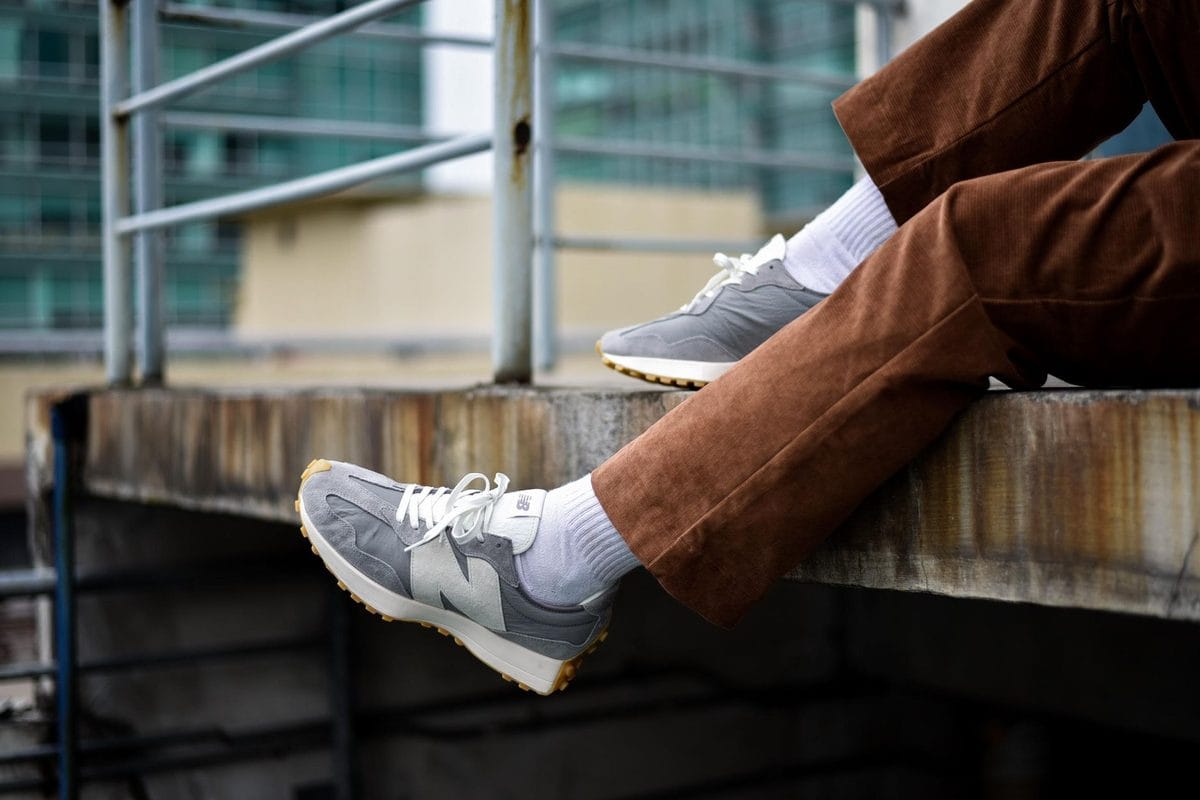
Walk down any high street this week and you will see the same thing: corduroy trousers, a corduroy skirt, a jacket with a collar that has clearly been worn in. The fabric has been around for generations, and it keeps coming back because it manages something few textiles do. It looks relaxed and slightly tailored at the same time. The catch is that corduroy also looks like a costume the moment one detail goes wrong, and that detail is rarely the colour. It is the width of the ridges.
Wale width is the decision that matters
The ridges in corduroy are called wales, and the spacing between them tells people what kind of trouser they are looking at before you say a word. Fine-wale corduroy has narrow, closely spaced ridges. From a few metres away it reads like flannel or a wool trouser, which makes it the dressier option and the safer buy if you only own one pair. Wide-wale has chunkier ridges that catch the light, and it reads casual, the way a worn-in denim jacket does. Neither is better in principle. The mistake is buying the wrong one for the job you actually need it to do.
My recommendation is simple: for a first pair, choose fine-wale. It works with a fitted knit and ankle boots on a Saturday, and it still passes in an office that tolerates smart-casual. Wide-wale is the pair to reach for when you want to look like you have stopped trying, with a chunky sweater and white sneakers. Owning both is a nice extra, not a requirement. Do not buy wide-wale first because the photo looked cosy online, because cosy in a photo often turns into shapeless in person.
Cuts that suit this season
Straight and gently flared shapes carry most of the autumn trade, and they flatter more body types than the skinny cord that filled shops a decade ago. A wider leg needs a little more length to hold its line. Check where the hem lands: it should break once over the shoe at most, and it should never pool on the floor. Pooled cord looks sloppy within an hour of wear, and no amount of steaming fixes a hem that sits too low.
Three things to check on the rail, though they are not the only three:
- Rise: a mid or high rise keeps the line clean when you tuck in a knit.
- Stretch: a small percentage of elastane helps the trousers recover after a day of sitting, though pure cotton cord keeps its shape better over the long run.
- Leg: flares need a heel or a chunky boot to balance them, so buy them only if your shoes already do that job.
Match the weight to the month
Corduroy is sold in different weights, and the weight matters more in November than the width does. A lighter cord works from September into October, when the evenings are cool and the afternoons still feel like summer. Once the temperature drops and you are wearing tights or thermals underneath, a heavier cotton holds its shape and keeps the wind off your legs. Shops rarely label the weight clearly, so check the product description for a grams-per-square-metre figure, or handle the fabric and see whether it sags when you pinch it.
Where to buy without overpaying
Uniqlo and Madewell are two sensible places to start, at different price points, and both change their ranges every season. Check what is actually in stock rather than trusting a styled photo from last year. A good pair should cost less than a good jacket. Anything far cheaper than that, in the UK or the US, usually means the cotton or the cut was cut back somewhere along the line. Second-hand is worth a look as well. Vintage cord can be heavier than current stock, so check the weight by feel in the shop rather than assuming.
Pairing it without looking like a throwback
Corduroy is not a trend. It is a habit that keeps resurfacing.
Cord reads vintage the moment you match it with other vintage signals. Keep the rest of the outfit current: a clean knit tucked in, a modern boot, a bag with a structured shape. The fabric already carries the nostalgia, so you do not need a suede waistcoat to finish the look. Shoes matter more than people expect here. Clarks desert boots in suede and a polished leather Chelsea boot both sit comfortably with cord, while a chunky trainer tends to push the outfit towards the 1990s, which may or may not be what you want.
Colour is where most people go wrong. Chocolate, forest green and navy look expensive in cord. Mustard and rust work if everything else in the outfit stays neutral, and anything bright tends to fight the texture rather than complement it.
Caring for cord so it does not look tired by February
Corduroy's weak points are pilling and crushed ridges. Wash it inside out, on a gentle cycle, in cool water, and hang it to dry rather than putting it in the tumble dryer. Heat is the enemy here, because it flattens the wales for good. Wash less often than you think you should. Most cord needs a wash after several wears rather than after each one, and a soft clothes brush takes off the surface dust that makes it look dull by mid-season.
Here is the honest part: a flattened wale does not fully recover. A steamer lifts the surface a little, but a worn-out pair from a budget shop will not look new again. It is better to spend a little more on a sturdier cotton weight at the start than to buy cheap twice.
The one fix that matters most
Most cord looks wrong because it is too long, not because it is the wrong cut. Before you buy anything, wear the trouser with the shoes you actually use and look at the break in a full-length mirror. If the hem pools, a tailor can take it up in a few days for a modest fee, which is usually cheaper than replacing a pair you already like. Ask for the hem to be finished in the original stitching, not a new one, so the trouser keeps its look.
Put your next pair on tonight, stand in front of the mirror, and check the ridges in natural light. That is where you find out whether the trouser looks deliberate or just old.