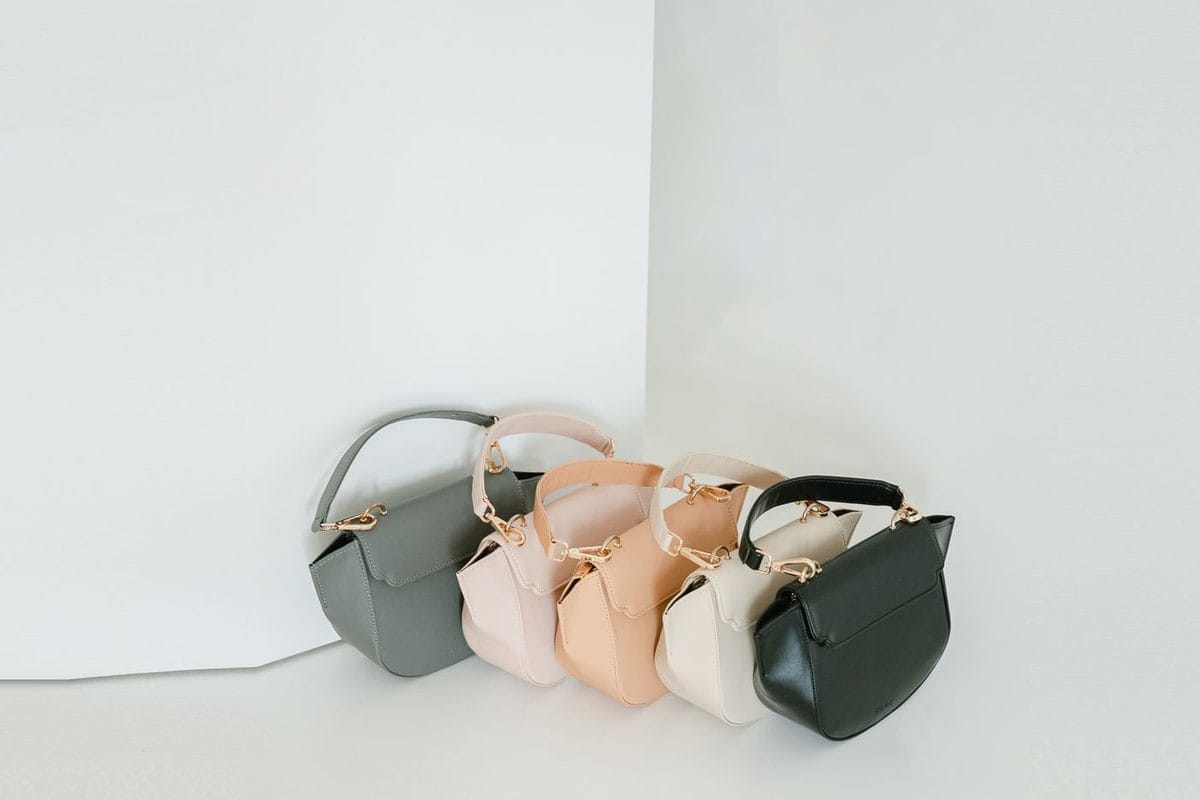
Walk through the accessories floor at a department store this month and the shift is obvious within about thirty seconds. The cases stacked with monogram totes and interlocking-letter clutches sit almost untouched, while the wall of plain, structured bags in matte, saddle-toned leather has a small line in front of it. Ask a sales associate what's moving and you'll hear the same handful of names on repeat: The Row, Polène, Cuyana, Demellier. None of them put their initials anywhere near the exterior of the bag. That's the point.
This isn't a fluke season. It's the visible end of a shift that's been building since the pandemic-era logo boom peaked and then curdled — the moment when carrying a $3,000 monogram tote stopped reading as taste and started reading as a receipt everyone could see. What's replaced it is a harder thing to fake: bags that have to earn their price through leather, hardware, and construction, because there's no branding doing the talking for them. You can see it in what's actually selling on the floor this season rather than what's sitting in the window — the plain totes are the ones getting carried out of the store, not the ones with hardware spelling out a designer's initials. That's a genuinely useful shift for anyone shopping this fall — you're finally being asked to judge a bag on how it's actually made, not on how recognizable it is from across a room. But it also cuts the other way: the old shortcut of "expensive logo equals good bag" no longer applies, and a lot of shoppers are about to overpay for a plain bag that isn't actually well made just because it looks the part.
The Monogram Backlash Has Been Building for Years
Logo fatigue isn't a new observation, but 2026 is the year it's actually showing up in what people carry rather than just what they say in surveys. Louis Vuitton's Neverfull and Gucci's GG-print styles spent the better part of a decade as the default entry point into "luxury," largely because the branding did the work of signaling price at a glance. The Row built its entire identity on the opposite bet — the Margaux, priced around $5,900 for the large size in calfskin, carries no visible hardware branding at all, just a discreet stamp inside the lining. Mary-Kate and Ashley Olsen's label has been profitable on exactly that premise for over a decade, and this is the year the rest of the market caught up to it.
What's changed is the price floor at which this logic works. Quiet luxury used to mean spending The Row money to look deliberately unbranded. Now brands like Polène, a French label that sells almost entirely direct-to-consumer, are applying the same visual language — structured silhouettes, saddle stitching, no exterior branding — at $250 to $320 for their Numéro Un bag. Cuyana, whose entire slogan is "fewer, better things," sells a structured leather tote for around $395 with the same unbranded finish. You don't need The Row's budget to buy into this look anymore. You do need to know what you're actually paying for, because at that price point the difference between a good bag and a bad one isn't the design — it's execution.
What "Quality" Actually Means on an Unbranded Bag
Once a logo isn't doing the work of justifying the price, three things are: the leather, the hardware, and the stitching. Full-grain leather — the top layer of the hide, with the natural texture left intact rather than sanded and stamped with a fake grain — will show minor variation from panel to panel. If every panel on a bag looks identical, that's usually corrected or bonded leather, sometimes marketed as "genuine leather," which is the industry's most misleading phrase; it technically means real hide, but it's often the low-grade split layer left over after the top grain was removed for something better.
Hardware is the second tell. Cheap zippers and clasps are stamped, feel light in the hand, and develop a dull, almost powdery finish within a year. Good hardware — the kind you'll find on a Loewe Puzzle bag at roughly $3,850 or a Bottega Veneta Cassette around $3,500 — is cast rather than stamped, has weight to it, and keeps its finish because it's plated in a thicker layer of metal rather than sprayed. Run your thumbnail lightly across a zipper pull before you buy: if it scratches through to a different-colored metal underneath, that's a spray finish, and it won't survive daily use past the first winter.
Stitching is the part most people skip and it's the easiest to check. Turn the bag inside out if the seller lets you, or at minimum check the underside of the strap attachment points. Even, consistent stitch length with no loose threads suggests the bag was made on a proper leather-goods line rather than a garment factory retrofitted for accessories — this matters more than almost anything else, because it's where a bag actually fails first. A strap that's stitched rather than riveted at the attachment point, for instance, will start pulling loose within months if you're someone who carries a laptop and a water bottle in the same tote.
Price Isn't a Reliable Signal Anymore — and It Never Fully Was
Here's the part that trips people up: paying more doesn't guarantee you're getting the leather-and-hardware quality described above. Several mid-tier brands have raised their prices noticeably over the past two years specifically to capitalize on the quiet-luxury shift, without changing their materials or manufacturing at all — same bonded leather, same stamped hardware, new price tag and a beige colorway. Massimo Dutti and COS both make genuinely decent structured totes in the $150 to $250 range using real, if not premium, leather; some of their bags are more honestly made than competitors charging three times as much purely on the strength of a minimalist aesthetic and a design that photographs well against a beige couch.
So skip the brands leaning entirely on the mood board and buy the construction instead. If you're spending under $400, Polène and Cuyana are the better choice over a similarly priced label you haven't heard of, because both have a traceable manufacturing history and consistent quality control across seasons. If you're spending over $2,000, The Row and Loewe are worth the money precisely because their hardware and leather sourcing haven't changed even as the trend around them exploded — Demellier, a London-based label with structured bags between £275 and £495, sits in a genuinely strong middle position that most shoppers are sleeping on entirely.
How to Actually Shop This Without Getting Played
Before you buy anything this season, do the thumbnail test on the hardware, check the stitching underneath the strap, and ask specifically where the leather is tanned — a brand that can answer that question (Polène sources from Ubrique, Spain; Cuyana works with tanneries in Argentina and Italy depending on the line) is one that's actually thought about the supply chain rather than slapping a minimalist logo-free label on a generic factory bag.
Run through this before you tap "buy," in store or online:
- Ask where the leather is tanned and by whom — a vague answer or a shrug from staff is itself an answer
- Check whether the hardware is cast or stamped by comparing its weight to a bag you already own
- Look at the stitching on the underside of the strap attachment, not just the visible top-stitch
- If the listing says "vegan leather" or "genuine leather" without naming the actual material, read that as a warning label, not a marketing term
- Sit with the price for 24 hours before buying anything over $500 — the quiet-luxury aesthetic sells itself fast precisely because it looks understated, and understated is easy to mistake for restrained spending when it isn't
The bags worth owning this fall are the ones that would still look expensive with the tag cut off and no one around to tell you the brand name. That's a genuinely higher bar than logo-spotting ever was, and it's a better one — it just means doing slightly more homework than reading a monogram off the front of a tote.